





Aktobe 425 Project
A Demonstration New City for Cross-Border Industrial Chain Synergy · A New Model of China–Kazakhstan Industrial Cooperation
Kazakhstan · Aktobe | Global Strategic Cooperation and Industrial Layout Promotional Brochure
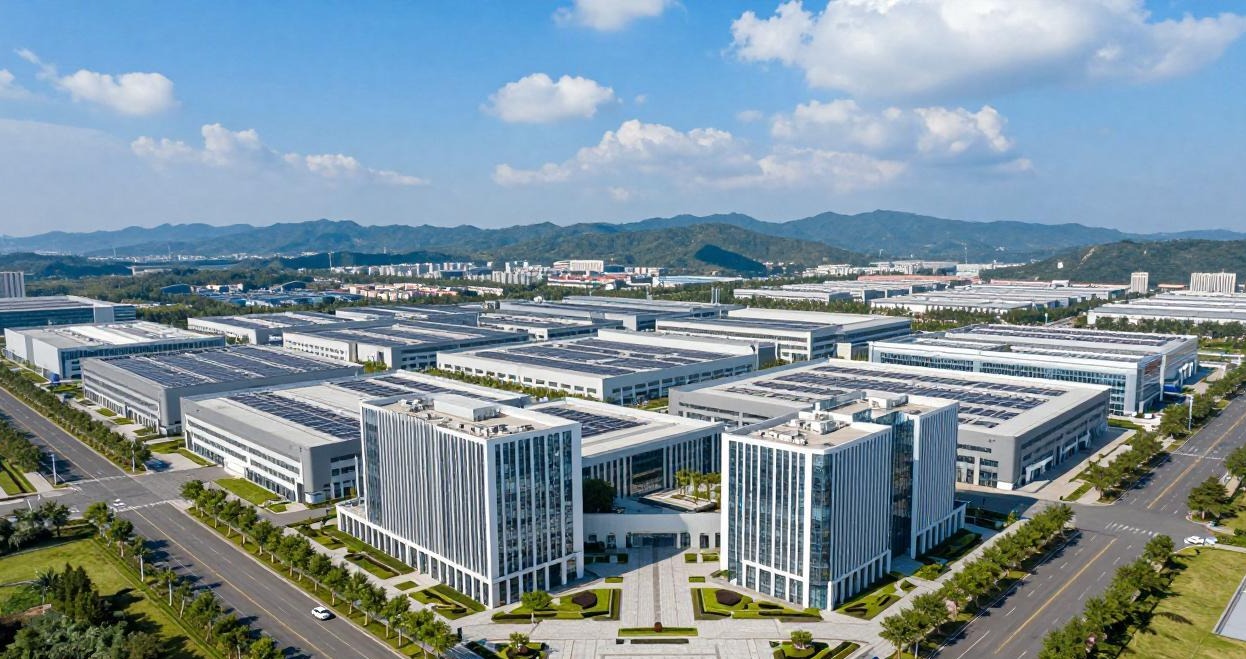
Project Rendering · Aerial Panorama of a Modern Industrial New City
Against the backdrop of the Belt and Road Initiative moving toward high-quality development, industrial cooperation and strategic coordination between China and Kazakhstan continue to deepen. The Aktobe 425 Project is located in Aktobe Region, a key transportation hub in western Kazakhstan. With a total planned area of 425 hectares, the project takes “high-level industrial agglomeration, building a complete industrial chain, and empowerment by a cross-border logistics hub” as its strategic core. It integrates three major industrial spaces: R&D and office, smart manufacturing, and commerce and logistics. It aims to become a benchmark project for synergy across the full cross-border China–Kazakhstan industrial chain and a leading demonstration zone for modern industrial development in Central Asia.
Key Project Facts
|
Project Name |
Aktobe 425 Project |
|
Местоположение Location |
Aktobe Region, Kazakhstan (western logistics hub center) |
|
Total Planned Area |
425 hectares |
|
Positioning |
Demonstration new city for transnational full-industrial-chain synergy / modern integrated industrial zone |
|
Core Concept |
Extending, completing and strengthening the chain; upstream–downstream integration; cross-border cluster development |
|
Core Industry Layout |
Petrochemicals · Industry & Textiles · Agricultural Deep Processing · New Energy Equipment Manufacturing · Cross-Border E-Commerce Logistics · Computing Center, etc. |
I. Background: China–Kazakhstan Strategic Cooperation and a New Fulcrum for Complementary Industrial Chains
China and Kazakhstan are model strategic partners: geographic neighbors with converging interests and a shared destiny. Today, the two countries’ traditional cooperation rests on a solid foundation, and there is ample room for incremental growth in emerging industrial chain collaboration. Kazakhstan has become the core hub and strategic fulcrum for Chinese industry going west, connecting Central Asia and Eurasia.
● Strong trade pull: China has remained Kazakhstan’s largest trading partner and largest export destination for many consecutive years, and is one of its principal sources of foreign investment. Bilateral trade reached US$48.7 billion in 2025, and growth continued at a rapid 46.6% in the first quarter of 2026.
● A logistics network strong in both efficiency and quality: More than 80% of China–Europe Railway Express trains transit Kazakhstan, forming a fast, low-cost and secure channel for cross-border supply chains.
● Deeply complementary industrial chains: Kazakhstan is extremely rich in upstream resources such as minerals and energy, and has urgent needs for downstream deep processing and industrial upgrading; China has clear strengths in engineering technology, high-end equipment and full-industrial-chain integration. Building on their traditional cooperation strengths, the two countries are accelerating the extension into digital, green and high-value-added industrial chains.
● Head-of-state-level strategic endorsement (the highest credit backing): On September 25, 2026, the first Kazakhstan–China Investment Forum was held in Almaty. In his remarks at the opening ceremony, President Tokayev specifically mentioned that Aktobe Region is working with Chinese partners, on a pilot basis, to build a special industrial park that meets international standards. As a key park publicly named by Kazakhstan’s top leadership on a national-level investment platform, this project has thereby received head-of-state-level strategic endorsement, giving multinational companies that settle here the strongest possible policy certainty and confidence.
II. Location Advantages: Aktobe — Gateway Hub of Eurasian Cross-Border Trade and Logistics
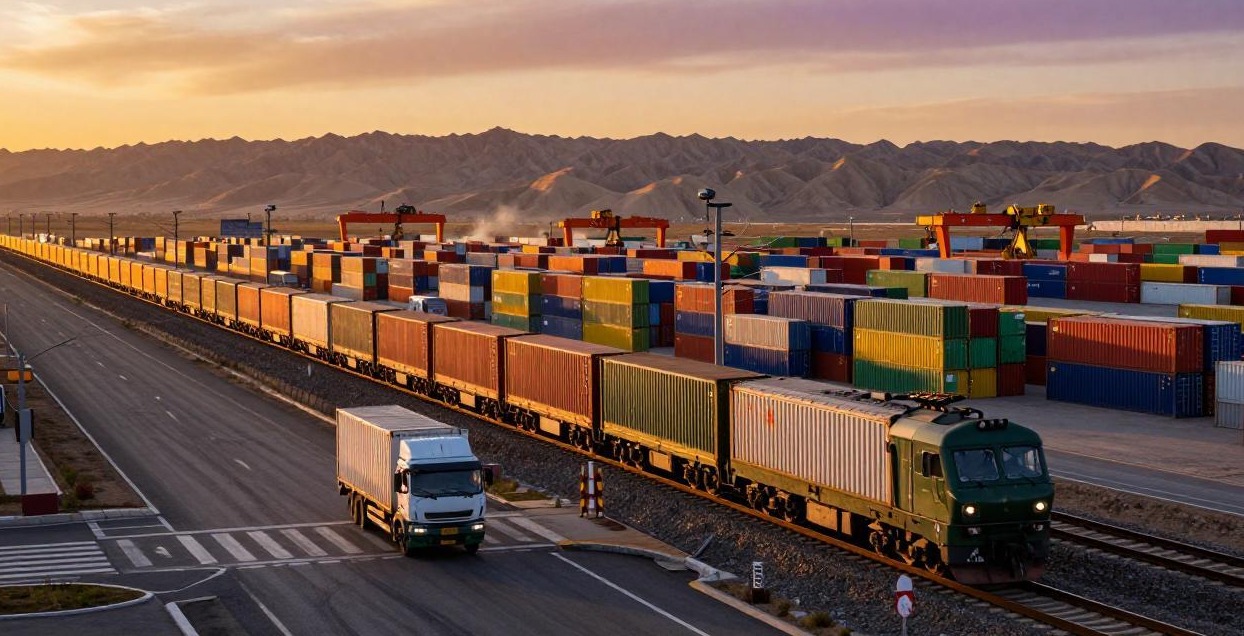
The project is located in Aktobe Region, the largest city and a railway hub in western Kazakhstan, with outstanding industrial reach and logistics connectivity:
● Multimodal transport corridor: Situated close to major regional highways and railway trunk lines and deeply embedded in the China–Europe Railway Express cross-border transport network, the project enables seamless multimodal transport among Central Asia, Europe and mainland China, greatly shortening cross-border cargo transit cycles.
● A modern industrial ecological foundation: The site adjoins natural water systems and ecological green belts, fully meeting the sustainable development requirements of modern Green Factories and low-carbon parks, and providing international enterprises with a high-standard external business environment.
● Ample space and strong carrying capacity: Sufficient reserved industrial land lies nearby, supporting large multinational enterprises in integrated planning and contiguous development, as well as the clustered settlement of upstream and downstream supporting companies.
III. Industrial Anchors: Six Core Industry Sectors with Multidimensional Complementarity
Drawing on western Kazakhstan’s abundant factor endowments and locational dividends, and aligning precisely with the industrial upgrading strategies of both countries, the Aktobe 425 Project has scientifically and forward-lookingly planned six core industry sectors, aiming to build a modern, integrated industrial ecosystem with a high degree of upstream–downstream synergy:
● Petrochemical industry cluster: Leveraging the highly competitive raw material and energy prices locally and in surrounding areas, the project is actively planning to introduce advanced chemical processes and full-industrial-chain manufacturing capabilities. It focuses on downstream deep processing of oil and natural gas and the manufacture of high-value-added chemicals, promoting the local conversion of upstream resources and the extension of industrial chain value.
● Industrial and textile industry cluster: Based on demand for light industry and consumer goods in Central Asia and neighboring markets, a modern light manufacturing and textile and garment industry base is planned. By taking on regional and international industrial relocation, the project will build a complete physical industrial production network from primary raw material processing to finished textile manufacturing.
● Agricultural products deep-processing industry cluster: In line with the deepening trend of China–Kazakhstan agricultural cooperation, the project plans, with foresight, a modern system for high-value processing of agricultural products, food manufacturing and cold-chain logistics. By introducing green processing and safety traceability technologies, it will comprehensively raise the added value of local crop and livestock products and build a stable cross-border food supply chain serving the Chinese and Eurasian markets.
● New energy equipment manufacturing industry cluster: Responding to the global low-carbon transition and Kazakhstan’s green energy strategy, the project focuses on emerging fields such as wind power, photovoltaics and energy storage. The park plans manufacturing space for wind turbine components, photovoltaic modules and new energy storage equipment, building a highly influential base for new energy equipment assembly and production in Central Asia.
● Cross-border e-commerce logistics industry cluster: The project makes use of Aktobe’s gateway network advantage as a “Eurasian transit hub.” It plans, to a high standard, international bonded warehouses, multimodal warehousing centers and a smart logistics distribution platform, providing cross-border e-commerce companies in China–Kazakhstan and China–Europe trade with one-stop, high-speed integrated warehousing-and-distribution logistics support.
● Computing center (digital infrastructure): Taking advantage of the area’s abundant space, stable power supply and favorable natural cooling conditions, the project lays out, with foresight, high-performance computing centers and big data storage space. This provides strong underlying computing power for digital transformation, intelligent upgrading of traditional industries and smart city construction in Central Asia and the wider region.
IV. Project Positioning: A Modern Full-Industrial-Chain Agglomeration Zone Across the Entire Life Cycle
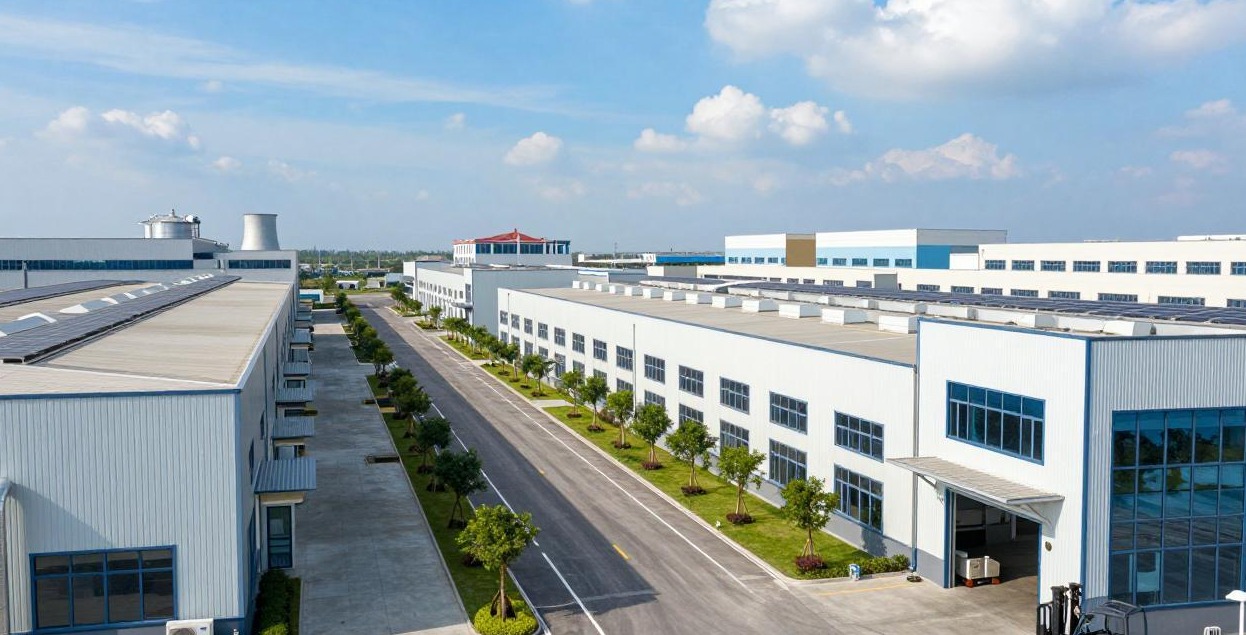
Through three strategies — “spatial restructuring, industrial agglomeration and ecological empowerment” — the Aktobe 425 Project builds a composite modern industrial system integrating R&D, manufacturing, warehousing and distribution, and services.
[Upstream: Technology R&D / Computing Power Support] → [Midstream: Petrochemicals · Light Industry & Textiles · Equipment · Agricultural Processing] → [Downstream: Cross-Border Logistics & E-Commerce]
▲ [Integrated Project Policies and Full-Chain Industrial Services]
● Clustered development of the cross-border industrial chain: Focusing on six pillar industry sectors, the project fully introduces mature industrial full-chain organizational capabilities. It forms an industrial ecosystem with vertical upstream–downstream synergy and horizontal linkage among companies of the same type, helping Kazakhstan achieve diversified transformation of its industrial structure.
● A fully functional closed loop of production factors: Functional zones are planned in an integrated way, including smart manufacturing lines, corporate headquarters offices, international multimodal warehousing and customs bonded logistics. This minimizes the cost of moving production factors across regions and comprehensively improves the operating efficiency of multinational supply chains.
● Top-level special policy incentives: As a key investment platform for China–Kazakhstan local-level cooperation, the project has been incorporated into the two countries’ high-level strategic cooperation framework. Enterprises settling here in the future can expect comprehensive special policy incentives and institutional “green lanes,” covering tax relief, land use, foreign exchange inflows and outflows, and customs clearance facilitation, minimizing the institutional costs and operating risks of cross-border investment.
● International productive-services support: High-standard productive-services facilities are provided, including professional apartments for foreign experts and research talent, a one-stop enterprise service center and specialized technical training bases, creating an international fourth-generation industrial park (Industry 4.0 Park) that can “attract enterprises, land projects and retain talent.”
V. Green and Low-Carbon: A Zero-Carbon-Oriented Smart Eco-Park Interwoven with Blue and Green Space
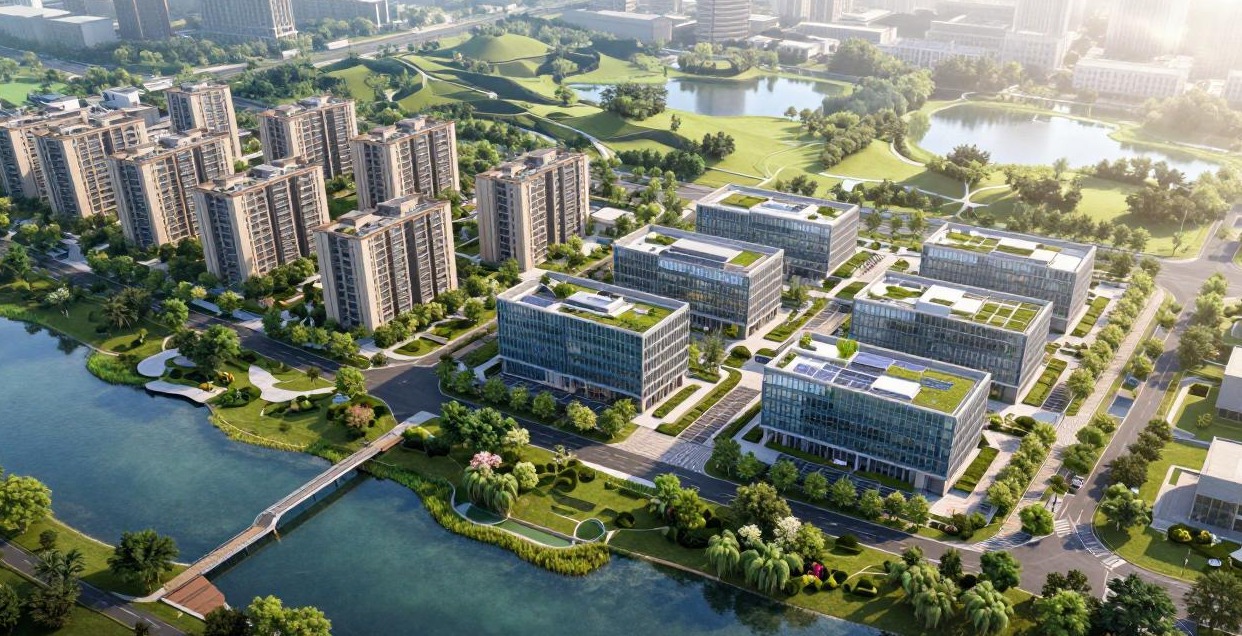
The project’s planning embraces advanced global ESG (Environmental, Social and Governance) principles, integrates deeply with the natural landscape, and actively applies low-carbon and circular economy models. Through the scientific layout of ecological buffer belts, low-carbon industrial corridors and waterfront circulating water systems, industrial production space, modern business space and natural ecological space are organically woven together. While ensuring high-efficiency, high-intensity industrial output, the project minimizes carbon emissions, creating a model Eurasian green industrial new city that combines production efficiency with environmental sustainability.
VI. Development Vision: Building Central Asia’s Most Competitive New Industrial Highland
The Aktobe 425 Project will seize the historic opportunity presented by the comprehensive deepening of China–Kazakhstan strategic cooperation and the high-quality development of the Belt and Road Initiative, and will fully unleash the dividends of its location and transport corridor, the benefits of resource premiums, and the dividends of China–Kazakhstan cross-border policies. The project aims to become the preferred destination for China–Kazakhstan international industrial capacity cooperation and a new demonstration highland for full-industrial-chain synergy in Central Asia, providing multinational companies expanding into the Eurasian market with the most valuable strategic space for incremental growth, and injecting lasting momentum into local economic diversification and job growth.
